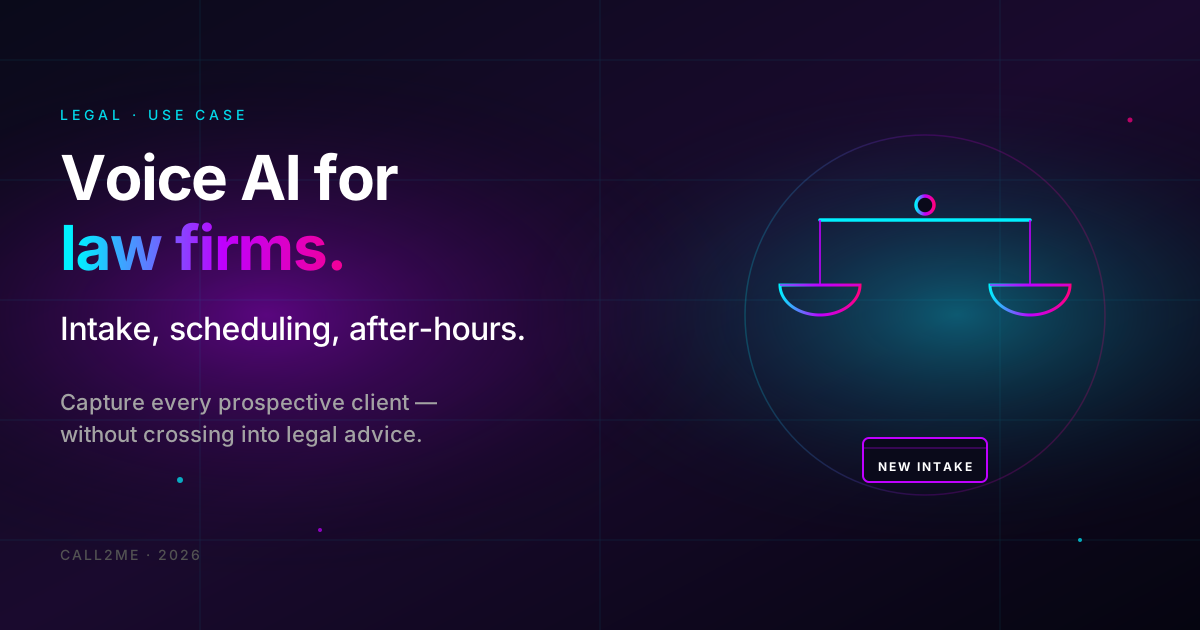
Voice AI for law firms: intake calls, scheduling, after-hours coverage
How law firms use voice AI to capture new-client intake calls around the clock, screen matters before they reach an attorney, and stop losing prospective clients to voicemail — without crossing the line into legal advice.
A prospective client who calls a law firm is rarely shopping casually. They have a problem — a dispute, an injury, a deadline, a fear — and they are calling because they want it handled. If that call hits voicemail, they do not leave a message and wait. They call the next firm on the list.
For law firms, the phone is the top of the funnel. And it leaks. Receptionists are with walk-ins or on another line. Evenings and weekends — when people finally have time to deal with a legal problem — go unanswered. Voice AI closes that leak without putting anything resembling legal advice in a machine's mouth.
- Why after-hours intake is where law firms lose the most prospective clients.
- The intake script: what the agent collects, in what order.
- Matter screening — declining the wrong cases before they reach an attorney.
- The hard line: intake and scheduling yes, legal advice never.
Where law firms lose prospective clients
Almost none of it happens during business hours when the front desk is staffed. The loss is concentrated in predictable gaps:
- After hours and weekends. Someone who got into a car accident on Saturday, or read a concerning letter Sunday night, wants to act now. A Monday-morning voicemail callback is often too late — they have already retained someone.
- The simultaneous-call gap. One receptionist, two ringing lines. The second caller hits voicemail and is gone.
- Lunch and coverage gaps. Short windows where the desk is unattended but the phone keeps ringing.
The common thread: these are not failures of effort. They are capacity limits. A voice AI agent answers every one of those calls, every time, and runs the intake conversation while the caller is still motivated.
The intake script
A good intake agent is not improvising. It runs a defined sequence and collects the same information a trained intake coordinator would:
- Caller identity. Full name and a callback number — captured first, so even if the call drops the firm can follow up.
- Matter type. What kind of legal issue is this? The agent maps the answer to the firm's practice areas.
- Short description. A few sentences in the caller's own words. The agent listens, does not interrupt, and records it for the attorney.
- Urgency and deadlines. Is there a court date, a statute deadline, a filing window? This drives how fast a human follows up.
- Scheduling. If the matter fits the firm, the agent offers consultation slots and books one. If not, it explains politely and ends the call.
Everything the agent captures lands as structured data: a clean intake record the attorney reviews before the consultation, instead of a vague voicemail.
Matter screening: declining the wrong cases
This is the part that quietly saves the most money. Not every call is a case the firm wants. A personal-injury firm gets calls about landlord disputes; a corporate firm gets calls about traffic tickets.
Give the agent two lists: the practice areas the firm does handle, and a short set of common matters it does not. When a caller describes something outside scope, the agent says so kindly — "that's not an area our firm practices in" — and ends the call without booking a consultation.
The attorney's calendar fills only with matters worth a consultation. The caller gets a fast, honest answer instead of a wasted appointment. Both sides win.
A voice AI intake agent collects information and schedules consultations. It does not answer "do I have a case?", "how much will I get?", or "what should I do?" — those are legal advice and belong to a licensed attorney. The agent's prompt must explicitly instruct it to decline advice questions and offer a consultation instead. Cross this line and you create a real liability, not a convenience.
Handling difficult calls
Intake calls to law firms are not neutral. Callers may be frightened, angry, or in genuine crisis. The agent should be built for that:
- Recognize urgency cues. Mentions of an imminent deadline, an arrest, or a safety concern should escalate immediately — transfer to an available attorney or flag the intake as urgent for a fast human callback.
- Stay brief and calm. A distressed caller does not need a chatty agent. Short, steady, respectful responses.
- Never counsel. The agent does not reassure with legal opinions or predictions. It captures the situation and gets a human involved.
The goal is a smooth handoff, not a machine pretending to be a lawyer.
Confidentiality and recording
Intake calls and their transcripts are confidential client information from the first sentence. A few practical points — and this is not legal advice, confirm requirements for your jurisdiction:
- The agent can read a confidentiality and recording-consent notice at the start of the call, using the exact wording your firm provides.
- Call recordings, transcripts, and intake records should be stored and accessed under the firm's own retention and confidentiality policy.
- Access to that data should be limited the same way any sensitive client file is limited.
The platform provides the encryption and the controls; the policy is the firm's.
Getting started
Setup begins by teaching the agent your firm: practice areas, what you decline, consultation availability, and the intake questions you want asked in order. Your existing firm number forwards to the agent — callers dial the same number, and the firm stops losing the after-hours and overflow calls that used to go to voicemail.
The phone stays the top of the funnel. It just stops leaking.
Frequently asked
Q.Can a voice AI agent give legal advice?
No — and it should be explicitly instructed not to. The agent's job is intake and scheduling: collecting the caller's name, contact details, matter type, and a short description, then booking a consultation. Anything resembling a legal opinion belongs to a licensed attorney. The prompt should make the agent decline advice questions and route them to a consultation instead.
Q.How does the agent handle a caller in genuine distress?
Intake calls to law firms sometimes involve people in difficult situations. The agent should be instructed to recognize urgency cues, stay calm and brief, and escalate fast — either transferring to an available attorney or flagging the intake as urgent so a human calls back quickly. The agent should never try to counsel; it captures and routes.
Q.Is client confidentiality a problem with call recordings?
Intake calls and their transcripts are sensitive. Confidentiality and recording-consent obligations rest with the firm, not the platform. The agent can be configured to read a consent and confidentiality notice at the start of the call, and call data should be handled under the firm's own retention and access policy. This post is not legal advice — confirm requirements with your jurisdiction.
Q.What matter types should the agent screen for?
Give the agent the practice areas your firm actually handles and a short list of what it does not. When a caller describes a matter outside the firm's areas, the agent says so politely and ends the call without booking — saving the attorney a wasted consultation. This conflict-light screening is one of the highest-value things intake automation does.
Keep reading
All posts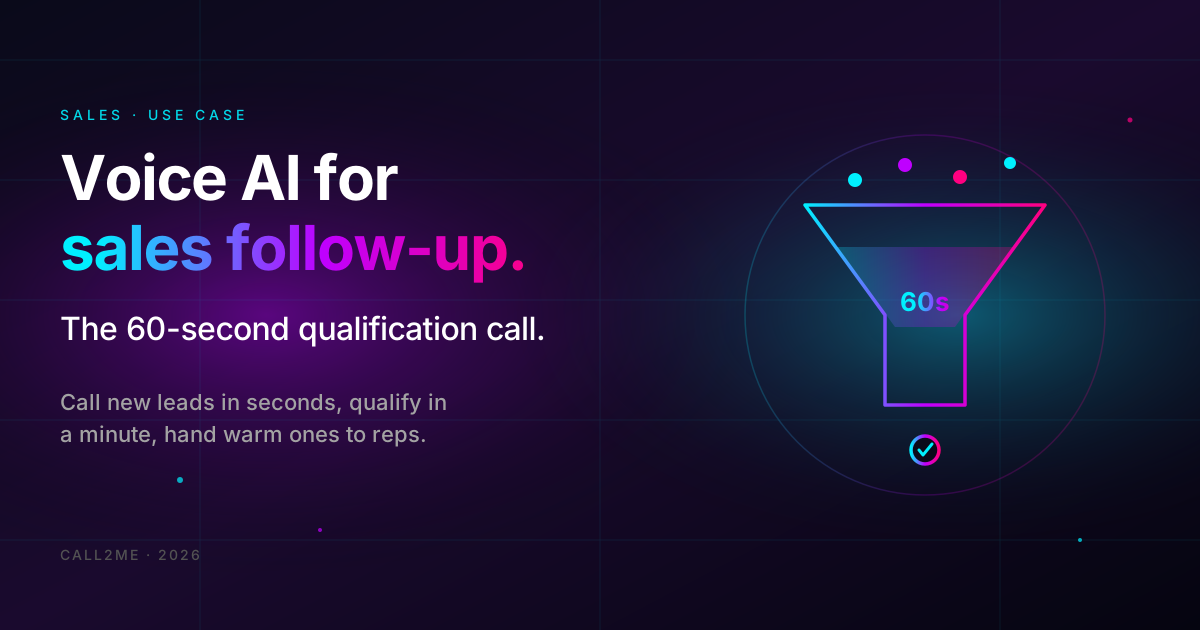 Sales
SalesVoice AI for sales follow-up: the 60-second qualification call
Most leads die in the gap between form submission and the first human call. How sales teams use voice AI to call new leads within seconds, qualify them in under a minute, and hand warm prospects to reps — while disqualifying the rest.
May 19, 20264 min Healthcare
Voice AI for dental practices: pain triage, recall calls, and the no-show problem
Dental practices have a different phone problem than general clinics — pain triage decisions, slot-type matching for cleanings vs procedures, insurance pre-checks, and a no-show rate that quietly eats 8-15% of revenue. How voice AI handles each one.
May 13, 20267 min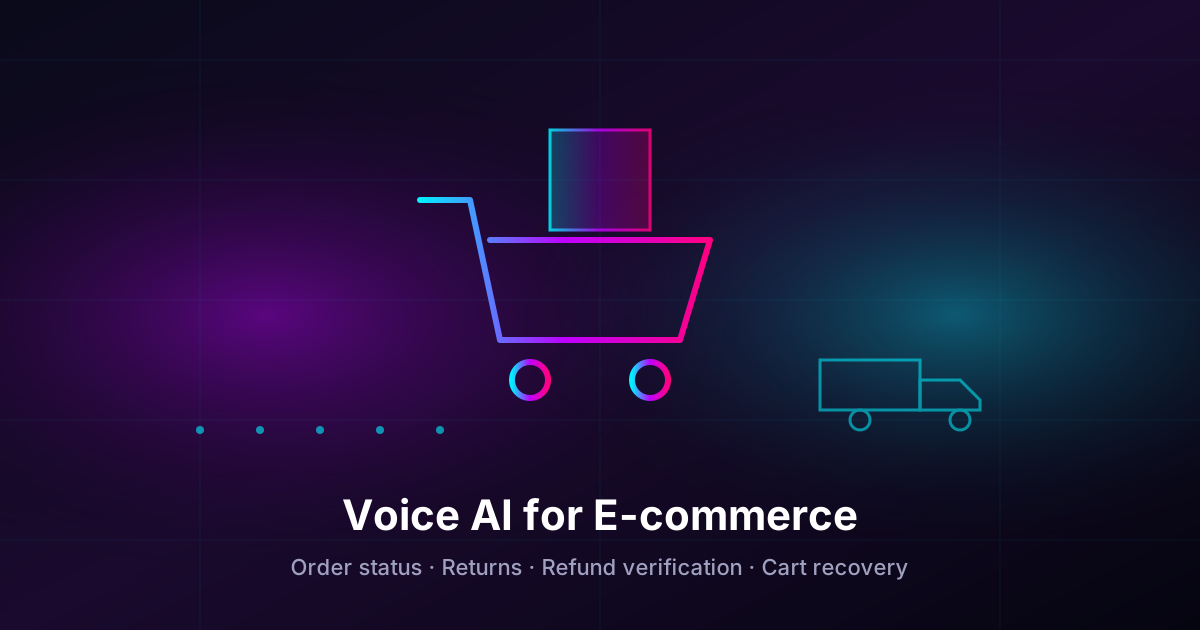 E-commerce
Voice AI for e-commerce: order status, returns, and abandoned-cart recovery on the phone
How online retailers use voice AI to handle the four calls that swamp support — where is my order, can I return this, did my refund go through, and the abandoned-cart save call that pays for the entire system.
May 13, 20267 min