Voice AI for sales follow-up: the 60-second qualification call
Most leads die in the gap between form submission and the first human call. How sales teams use voice AI to call new leads within seconds, qualify them in under a minute, and hand warm prospects to reps — while disqualifying the rest.
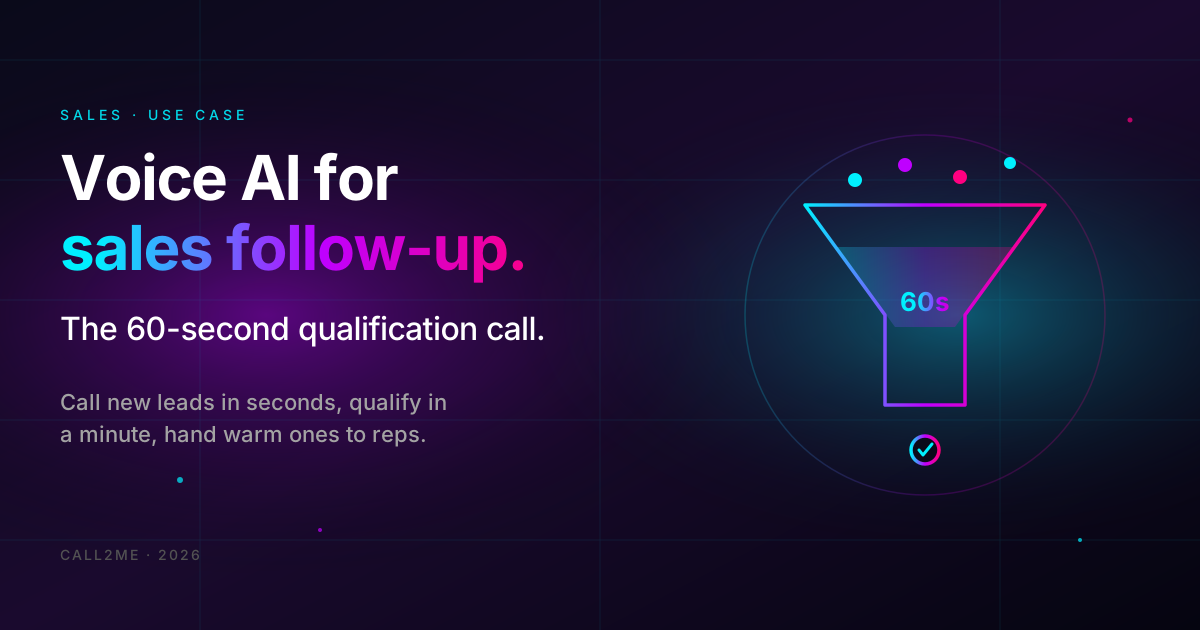
Here is the most expensive gap in most sales funnels: a lead fills out a form, and then waits. Twenty minutes, an hour, until tomorrow — for a rep to get around to calling. By the time the call happens, the lead has cooled, moved on, or talked to a competitor who called first.
Speed-to-lead is one of the most studied numbers in sales, and it always points the same way: the faster the first contact, the better the outcome. The problem is that "instantly, every time, at any hour" is not something a human team can sustain. Voice AI can.
- Why the form-to-first-call gap quietly kills good leads.
- The 60-second qualification call — structure and win condition.
- How the agent routes: warm handoff, scheduled meeting, or clean disqualify.
- Why disqualifying leads is the underrated half of the job.
The gap that kills leads
A lead's intent is highest at the moment they submit the form. That is the peak. Every minute after is decay. Yet the typical flow inserts a delay right at the peak:
- The lead lands in a CRM queue.
- A rep works through that queue when they get to it.
- By first contact, the lead may have submitted three other forms, or simply lost the urgency that made them fill yours out.
A voice AI agent removes the delay entirely. The form submission triggers an outbound call within seconds — while the lead is still on your site, still thinking about the problem they just asked about.
The 60-second qualification call
This is not a pitch. It is a short, honest, structured call with one job: figure out whether this lead deserves a rep's time, and if so, book it.
A good structure:
- Honest open. "Hi — you just requested information about [thing] on our site. I'm an automated assistant; can I ask two quick questions to get you to the right person?" Identifying as automated up front builds trust, not suspicion.
- Two or three qualifying questions. Need, timeline, rough scale — phrased as natural conversation, not an interrogation. The agent listens and records.
- Route. Based on the answers, the agent does one of three things (next section).
- Close cleanly. Whatever the outcome, the call ends in under a minute or two. Crisp respects the lead's time and the agent's win condition.
The whole thing fits in 60–90 seconds because it is not trying to sell. It is trying to sort.
Three outcomes, three routes
Every qualification call ends in exactly one of three ways:
- Warm handoff. The lead is a strong fit and available now — the agent transfers the call directly to an available rep, with the qualifying answers already captured. The rep picks up a pre-qualified, live conversation.
- Scheduled meeting. The lead is a good fit but now is not the time — the agent books a meeting on a rep's calendar and confirms the details. The rep's calendar fills only with qualified leads.
- Clean disqualify. The lead is not a fit — wrong size, wrong need, no timeline. The agent closes the call politely and tags the lead so no rep chases it. Optionally it routes the lead into a nurture sequence instead.
Structured data from every call flows into the CRM either way: who, what they need, the score, the outcome.
A 60-second qualification call that tries to close becomes a 10-minute call that does neither job well. The agent qualifies and schedules. Closing is the rep's work, on a real meeting, with a lead the agent already warmed up. Keep the agent's scope narrow and it stays fast and credible.
Disqualification is half the value
Teams focus on the leads the agent passes through. The leads it screens out matter just as much.
Every poor-fit lead a rep does not call is an hour returned to good-fit leads. A rep with a calendar of pre-qualified meetings is dramatically more productive than one working an unsorted queue — not because they got faster, but because the agent removed the dead weight before they ever saw it.
Disqualification also keeps your pipeline honest. A CRM full of leads no one will ever close is just noise. The agent's clean tagging keeps the pipeline showing what is actually real.
Outbound campaigns, same engine
The same agent that calls inbound leads can run outbound: re-engaging old leads, following up after a webinar, confirming interest before a rep invests time. It is the same 60-second conversation, just initiated by you instead of triggered by a form. For the mechanics of running these at volume, see our companion post on bulk outbound campaigns.
Getting started
Setup is teaching the agent three things: how to recognize a new lead (a webhook from your form or CRM), the qualifying questions and scoring rules your team uses, and where each of the three outcomes should route. Connect it to your calendar for scheduling and your CRM for the data, and the gap between form submission and first contact goes from twenty minutes to twenty seconds.
Frequently asked
Q.Isn't an instant robo-call to a new lead off-putting?
It depends entirely on framing. A call that opens with 'you just requested information about X — is now a good time for two quick questions?' is helpful, not intrusive, because the lead asked for contact seconds ago. The agent should identify itself honestly, keep it short, and offer to schedule instead if the timing is bad. The off-putting version is a long, scripted pitch — which is exactly what this pattern avoids.
Q.What does the agent actually qualify on?
Whatever your team uses to decide if a lead is worth a rep's time — typically need, timeline, budget range, and authority, but phrased as natural questions, not a BANT interrogation. The agent collects the answers, scores the lead against rules you define, and routes accordingly. The point is to spend rep hours only on leads that clear the bar.
Q.Should the agent try to close?
No. A 60-second qualification call closes nothing — it qualifies and schedules. The agent's win condition is a booked meeting with a rep for a good-fit lead, or a clean disqualification for a poor-fit one. Asking it to close turns a crisp helpful call into a long bad one.
Q.What happens to leads the agent disqualifies?
They get a polite, honest close on the call and are tagged in your CRM so reps do not chase them. Disqualification is a feature, not a failure — every poor-fit lead the agent screens out is rep time returned to good-fit leads. You can also route disqualified-but-nurturable leads into an email sequence instead of a rep.
Keep reading
All posts Legal
LegalVoice AI for law firms: intake calls, scheduling, after-hours coverage
How law firms use voice AI to capture new-client intake calls around the clock, screen matters before they reach an attorney, and stop losing prospective clients to voicemail — without crossing the line into legal advice.
May 19, 20264 min Healthcare
Voice AI for dental practices: pain triage, recall calls, and the no-show problem
Dental practices have a different phone problem than general clinics — pain triage decisions, slot-type matching for cleanings vs procedures, insurance pre-checks, and a no-show rate that quietly eats 8-15% of revenue. How voice AI handles each one.
May 13, 20267 min E-commerce
Voice AI for e-commerce: order status, returns, and abandoned-cart recovery on the phone
How online retailers use voice AI to handle the four calls that swamp support — where is my order, can I return this, did my refund go through, and the abandoned-cart save call that pays for the entire system.
May 13, 20267 min